

No Setup Icebreakers for HR Leaders That Build Psychological Safety

The best approach for global team icebreakers combines short, structured synchronous activities with asynchronous alternatives and consistent digital follow-up. This mix respects time zone differences, builds psychological safety across cultures, and holds up over months of recurring meetings rather than fading after the novelty wears off. The sections below give you the exact scripts, timing, and scheduling tactics to put it into practice.
TL;DR:
- Repeating the same activity for a month helps reduce setup effort and builds comfort for quieter participants in global team meetings.
- Structured activities like map introductions work best during onboarding, while quick, timed icebreakers suit recurring meetings.
- Asynchronous formats such as pre-recorded videos and photo threads enable inclusive participation across multiple time zones without sacrificing engagement.
- Clear purpose, timing, and turn order instructions improve the effectiveness and psychological safety of cross-cultural, multilingual team icebreakers.
- Incorporating digital nudges and consistent scripts enhances trust and connection, especially for high-context communicators in virtual teams.
Table of Contents
- 1. Ready-to-run icebreakers for global teams
- 2. Five-minute icebreakers for recurring meetings
- 3. Designing icebreakers for cross-cultural and multilingual teams
- 4. Asynchronous icebreakers for time-zone spread
- 5. How to run icebreakers well and measure their impact
- 6. Why this approach works: research and a practical playbook
- 7. Author perspective: trade-offs and a next step
- Gatherilla: try a no-setup platform for global team icebreakers
- FAQ
- Sources
1. Ready-to-run icebreakers for global teams
Different moments call for different activities. An onboarding week needs something that builds instant familiarity, while a retreat can sustain a longer, more playful format. Here are five formats that work across contexts, each with setup details you can copy directly into a meeting invite.
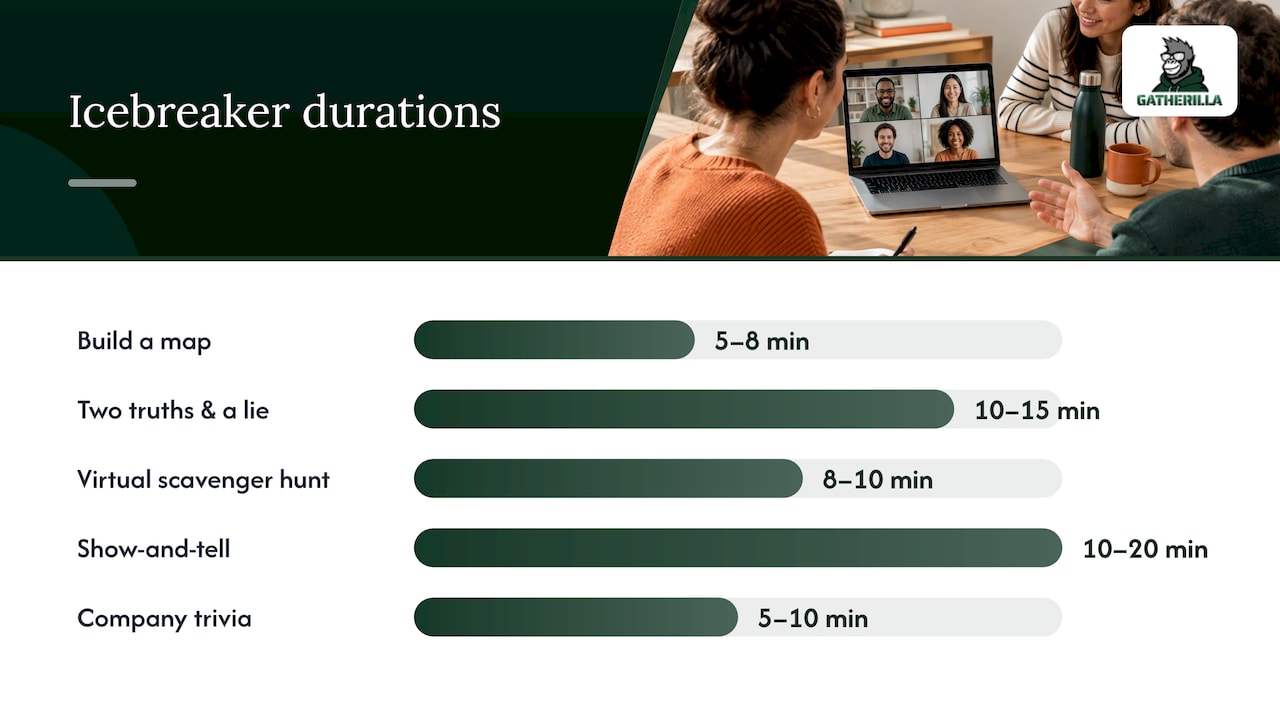
Build a map. Share a world map (Google My Maps or a simple slide works fine) and have each person drop a pin on their current location, adding one line about it. Takes 5 to 8 minutes, works for any group size, and needs only screen share. Use it in week one of onboarding or as a recurring feature for new hires. Debrief prompt: “What’s one thing about your city most people get wrong?”
Two truths and a lie, structured. The classic game creates anxiety for some participants unless you add structure. Announce the format in advance, give everyone 60 seconds to write their three statements before speaking, and offer an explicit opt-out (“pass” is always a valid answer). This small amount of structure matters: research on global virtual teams found that team-based interventions work especially well for high-context communicators when the facilitator states the purpose, length, and turn order before starting. Runs 10 to 15 minutes for a group of 6 to 10. Best for weekly syncs once trust is already partly established.
Virtual scavenger hunt. Give everyone 90 seconds to find an object matching a prompt (something blue, something that makes you laugh, something older than you). Works on video call, needs no tools beyond what’s already in people’s homes or desks. Takes 8 to 10 minutes for groups up to 15. Good fit for retreats or quarterly all-hands where energy matters more than depth.
Show-and-tell. Each person brings one object with a story, shown briefly on camera. Takes 10 to 20 minutes depending on group size, works best capped at 8 to 10 participants so nobody waits too long for their turn. Use for onboarding cohorts or small team retrospectives. Debrief prompt: “What does this object say about how you work?”
Company trivia. Quiz questions about company history, product milestones, or team facts, run through any polling tool or verbally with a show of hands. Takes 5 to 10 minutes, scales to any group size, and fits naturally at the start of an all-hands or monthly sync.
- Map-based introductions suit onboarding and new-hire weeks.
- Structured two truths and a lie suits established weekly syncs.
- Scavenger hunts and show-and-tell suit retreats and higher-energy gatherings.
- Trivia suits recurring all-hands where you want quick, repeatable engagement.
Pro Tip: Pick one activity per meeting type and repeat it for a month before rotating. Repetition lowers the setup cost and lets quieter participants get comfortable with the format.
For more ready-to-run formats and full scripts, our remote icebreaker games guide walks through additional variations you can adapt for different team sizes.
2. Five-minute icebreakers for recurring meetings
When a meeting is already packed, you still have room for a 60-second to 5-minute opener if you keep it tight and timed. These five work well as the first item on any weekly agenda.
- Last photo on your phone: each person describes (not shows, if privacy matters) the last photo they took, in one sentence.
- One-word check-in: everyone types one word describing their week into chat, then two or three people explain theirs out loud.
- 60-second intros: for new members, a strict 60-second timer forces brevity and keeps the group from running long.
- Last three emojis: share the last three emojis you used and let the group guess the context.
- Two-word wins: state one recent win in exactly two words, read aloud or dropped in chat.
Timing matters more than content here. Call on people in a fixed order (alphabetical by first name works well) so nobody feel singled out, and keep a visible timer on screen so the activity doesn’t creep past its five minutes. A facilitator should also watch for the same two or three people dominating responses and redirect with a direct, friendly prompt like “let’s hear from someone we haven’t heard yet.”
Rotate through the five options weekly rather than repeating the same one every time. Novelty keeps attention, while the underlying structure (fixed order, visible timer, one sentence per person) stays constant so the format never feels unfamiliar.
3. Designing icebreakers for cross-cultural and multilingual teams
A format that feels playful to one group can feel exposing to another. The adjustments that matter most are structural, not stylistic.
- Announce the purpose, length, and turn order before starting, and state clearly that passing is acceptable.
- Provide prompts in writing as well as out loud, since reading a question removes a layer of pressure for non-native speakers.
- Avoid prompts built on national or cultural stereotypes; neutral, open prompts that surface assumptions work better than “guess someone’s culture” formats. Toolkits from organizations like the Red Cross recommend building prompts around conversation starters rather than cultural generalizations, always followed by a short debrief.
- Give non-native speakers a few extra seconds before moving to the next person, and avoid rapid-fire formats that reward quick wit over thoughtful answers.
The research backs this up directly: a 2024 study of global virtual teams found that structured team-based interventions raise psychological safety especially for high-context communicators, while digital reminder nudges work consistently across cultural contexts regardless of communication style. That combination, structure for the live moment plus a nudge afterward, is what makes an icebreaker land the same way for everyone in the room, even when “the room” spans six countries.
Pro Tip: Send the exact wording of the prompt in the calendar invite the day before. A few extra seconds of preparation time changes who feels comfortable answering on the spot.
4. Asynchronous icebreakers for time-zone spread
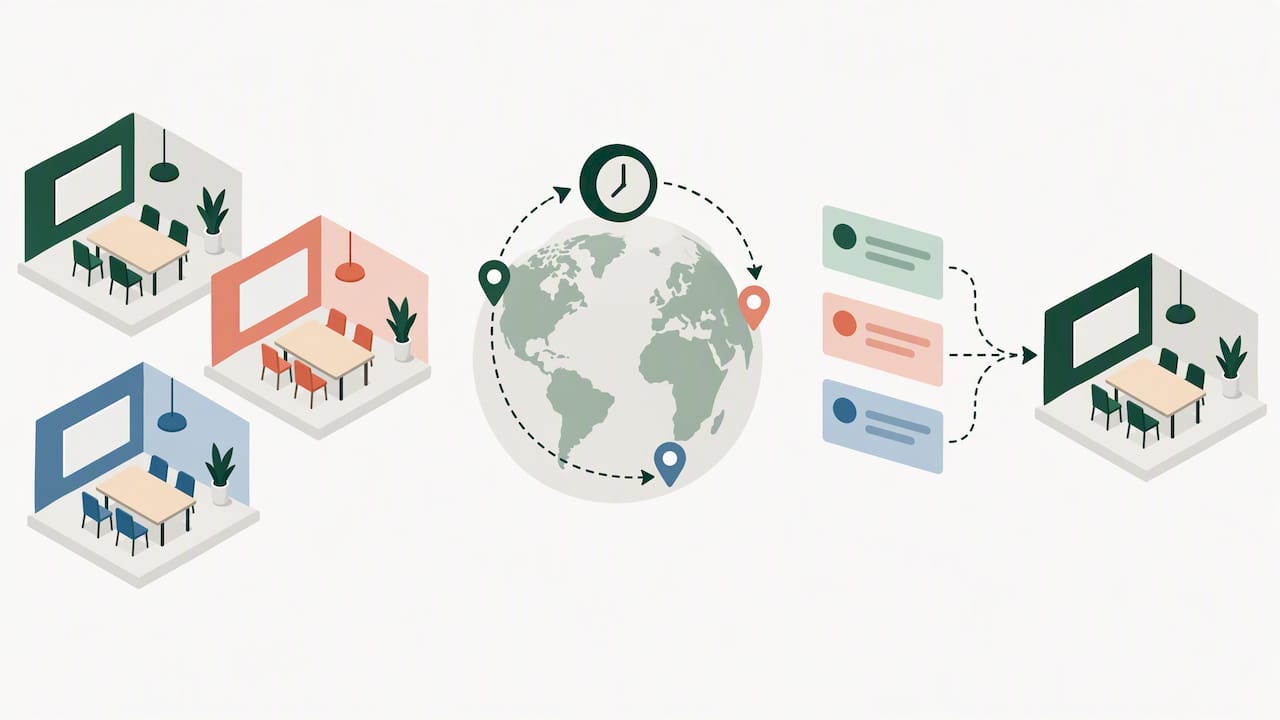
Not every team moment needs to be live, and forcing synchronous participation across a 10-hour spread creates its own inequity. Asynchronous formats solve a different problem: they let everyone contribute without someone always drawing the 11 PM slot.
- Pre-recorded introductions: a 60-second video, watched before a meeting, that the group can react to asynchronously or in a brief live debrief.
- Photo threads: a running Slack or Teams channel where people post a weekly photo prompt and comment on each other’s at their own pace.
- Shared boards: a Miro or Google Slides board where each person adds an answer to a standing prompt over the course of a week.
- Async scavenger hunts: the same scavenger format as above, but with a 48-hour window to post results instead of a live 90-second sprint.
Asynchronous formats fit best for onboarding (so new hires aren’t rushed), for building a general habit of sharing, and for any team where a majority of members would otherwise be asked to join calls outside normal hours. Live formats still win when the goal is immediate rapport-building, such as a new team’s first week together.
Research on cross-time-zone collaboration recommends blocking a small number of predictable live windows and rotating who absorbs the inconvenient time slot, rather than defaulting every activity to synchronous. Pairing that with async alternatives, detailed further in our guide to async team building, keeps the live moments meaningful instead of routine.
5. How to run icebreakers well and measure their impact
A good icebreaker fails without basic facilitation discipline, and most teams skip the measurement step entirely, which makes it impossible to know if the activity is working.
- Before the meeting: state the activity’s purpose in the invite, confirm the tech works (screen share, polling tool, timer), and include an opt-out line.
- During the meeting: run the activity exactly as scripted, keep to the time box, and close with one debrief question.
- After the meeting: send a one-line summary or highlight in the team channel so people who were quiet live can still engage.
Measurement doesn’t need to be elaborate. A one-to-three question pulse survey (“Did you feel comfortable speaking up today?”) run monthly gives you a trend line. Track participation rate (how many people spoke versus passed) as a simple proxy for comfort, and watch for anecdotal signals, more unprompted messages in team channels, more people volunteering for the next activity.
Asynchronous introductions have been shown to increase engagement and trust in virtual teams compared with no introduction at all, according to research on asynchronous introductions, which is one reason a short recorded intro before a live debrief often outperforms skipping the warm-up altogether. Pair any activity with a calendar reminder or post-meeting summary nudge. Our piece on building psychological safety walks through how to read these signals over time.
6. Why this approach works: research and a practical playbook
The combination recommended here isn’t a guess. Structured team-based activities and digital reminder nudges both raise psychological safety in global virtual teams, with team-based formats carrying extra weight for high-context communicators and nudges performing consistently across cultures. Early relational exchanges, even short two-to-five minute ones, have been linked to stronger trust and communication climates in newly formed virtual teams.
- No-download, browser-based activities remove the single biggest friction point: asking people to install something before they’ll participate.
- Daily or recurring challenges build a habit loop rather than relying on a single memorable event to carry team culture.
- Structured scripts (purpose, length, opt-out stated up front) translate directly into any platform or tool a team already uses.
This is the operational gap between knowing the research and acting on it: translating “structure reduces threat” into an actual line a facilitator reads before the activity starts.
7. Author perspective: trade-offs and a next step
Live activities build depth faster, but they inevitably favor whoever’s time zone is least inconvenienced. Async formats fix that fairness problem but can feel thinner on connection. Frequency helps a format become habit, but repeated too often it turns stale. There’s no single fix, only a balance you adjust as the team’s needs shift.
If you’re starting today, pick one five-minute live opener and run it for two weeks straight, paired with one async intro thread. Check in with a one-question pulse after week two before changing anything.
— Thomas
Gatherilla: try a no-setup platform for global team icebreakers
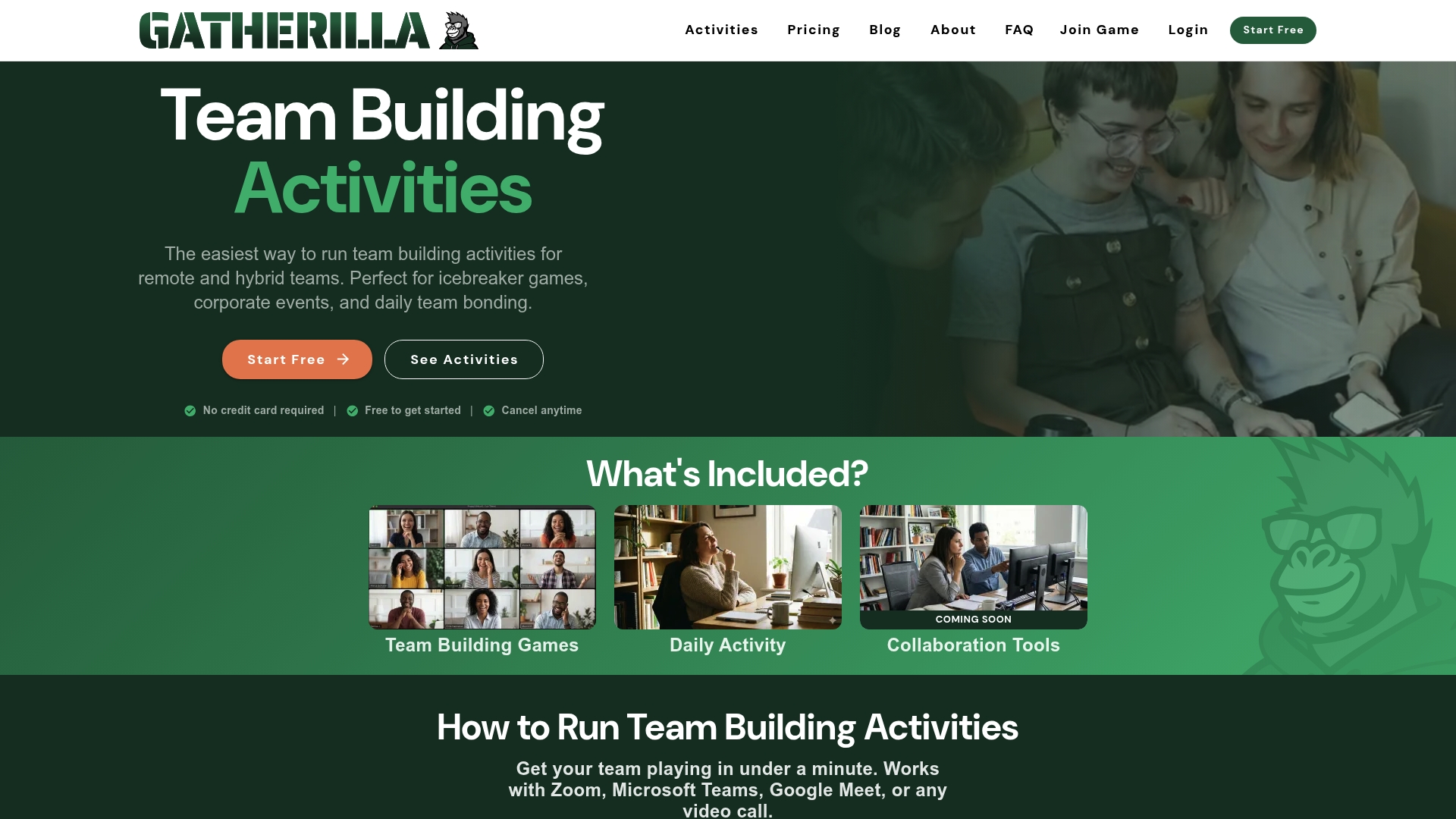
Everything above works with a whiteboard and a shared calendar, but running it consistently across a distributed team takes effort most HR leaders don’t have spare hours for. We offer a platform designed to remove that friction: with no downloads or accounts to manage, and games that launch directly inside video call tools.
- Daily challenges can give teams a recurring, low-effort touchpoint instead of relying on one big quarterly event.
- Multiplayer games that work for both live sessions and async participation can help ensure time-zone spread doesn’t block anyone from joining.
- A free tier allows teams to test a format before committing to anything further.
If you want to put this week’s playbook into practice without building scripts from scratch, check our pricing page and start with the free tier or a short pilot to see how it fits your team’s rhythm.
FAQ
What are some good icebreakers for a team activity?
Short, structured formats work best: map-based introductions, two truths and a lie with a clear opt-out, and quick trivia rounds all fit inside 10 to 15 minutes. The key is announcing the purpose and turn order before starting, which research on global virtual teams links to higher psychological safety.
What are five great icebreaker questions?
Strong prompts ask for specifics rather than generalities: “What’s the last photo on your phone?”, “What’s one word for your week?”, “What’s a recent two-word win?”, “What object on your desk has a story?”, and “What’s something about your city people get wrong?” Each one fits inside a one-minute turn and works across cultures without relying on stereotypes.
What are some good icebreakers for a team away day?
Retreats have room for longer formats like virtual scavenger hunts, show-and-tell, or a map-building exercise where everyone marks hometowns and travel history. These run 10 to 20 minutes and work well because the group already has dedicated time set aside, unlike a regular weekly sync.
What are some good five-minute team icebreakers?
A one-word check-in, a two-word wins round, or a 60-second strict-timer introduction all fit inside five minutes without derailing a meeting agenda. Keep a visible timer running and call on people in a fixed order to keep things fair and on schedule.
How do asynchronous icebreakers fit into a global team’s routine?
Asynchronous formats, like pre-recorded video introductions or a running photo thread, let every team member contribute without anyone being forced into an inconvenient time zone. Research on asynchronous introductions indicates that asynchronous, semi-guided introductions increase engagement and trust compared with no introduction, making them a solid complement to live activities rather than a replacement.
Sources
- Fostering psychological safety in global virtual teams: The role of digital reminder nudges and team-based interventions
- Challenging but Connective: Large-Scale Characteristics of Synchronous Collaboration Across Time Zones
- Asynchronous introductions and trust in virtual teams