

10 Emoji Games HR Managers Can Run in 2–5 Minutes, Backed by Research
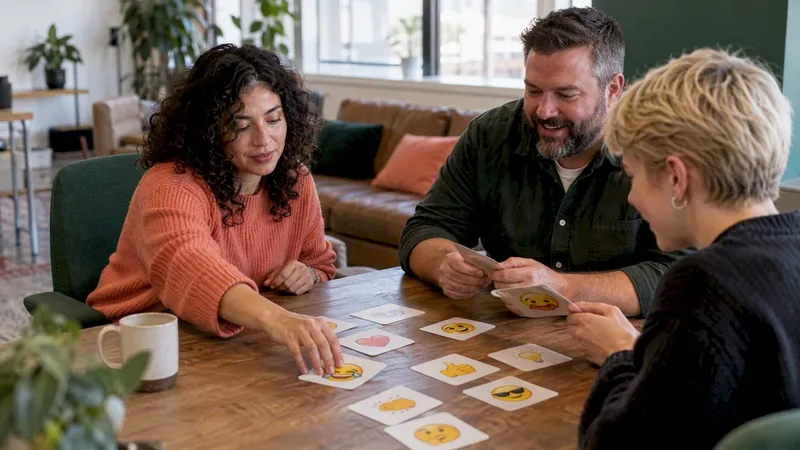
Start with emoji pictionary or emoji charades: they deliver the fastest engagement with the least setup of any emoji games for work. Both need zero prep, run in under ten minutes, and work equally well on video calls or around a conference table. They warm up a quiet room, get people laughing within the first round, and lower the barrier for employees who normally skip team-building activities altogether.
TL;DR:
- Emoji pictionary is the simplest game to run at work, requiring only a chat window, and scales effectively from small teams to large departments.
- Most emoji games take between two to ten minutes, with shorter sessions suitable for weekly routines and longer ones for monthly meetings.
- Using positive emojis with neutral messages enhances perceived warmth and competence, while negative or mismatched emojis can harm workplace perceptions.
- Virtual game facilitation requires basic tools like chat, reactions, and polls; in person, a whiteboard and printed emoji sheets suffice.
- Regularly incorporating emoji games can improve onboarding, boost morale, and foster team bonding without significant planning or technical setup.
Table of Contents
- 1. Top emoji games your team can run this week
- 2. Running emoji games virtually vs. in person
- 3. What research says about emoji etiquette at work
- 4. A leader’s checklist for choosing and scheduling games
- 5. What running these games actually taught us
- 6. Gatherilla makes emoji games a daily habit, not an event
- FAQ
- Sources
1. Top emoji games your team can run this week
These ten games cover warmups, deeper bonding exercises, and quick pulse checks. Pick one, read the rule, and run it in your next meeting.
- Emoji Pictionary: one player posts a short emoji sequence (say, a briefcase, a plane, and a palm tree for “business trip to the beach”) and the group races to guess the phrase within a two-minute window.
- Emoji Charades: instead of acting, a player types only emoji in chat to represent a movie or book title; the first correct guess in chat scores a point, and three rounds take about eight minutes.
- Two Truths and an Emoji Lie: each person posts three emoji strings describing facts about themselves, two true and one false, and teammates vote on which is the lie.
- Emoji Story Chain: starting from a prompt like “our worst Monday,” each participant adds one emoji to build a collective story, which works well as a five-minute opener for standups.
- Reaction Race: the leader posts a prompt (“react with how you feel about this deadline”) and the fastest matching reaction wins, using built-in meeting reactions instead of chat text.
- Emoji Pulse Polls: a quick poll where answers are emoji options instead of words gives leaders a one-minute temperature check on morale or workload.
- Emoji Bingo: cards filled with workplace-appropriate emoji prompts (“someone shares a pet photo,” “someone mutes by accident”) turn a recurring meeting into a light game without extra planning.
- Guess the Job (or Meeting Topic): one person emoji-codes their role or the day’s agenda and colleagues guess what it represents, which doubles as a soft onboarding icebreaker.
- Emoji Mood Check-In: at the start of a meeting, everyone drops one emoji describing their current state, giving the leader a fast read on the room before diving into business.
- Emoji Caption Contest: post a work-safe stock photo and ask the group to caption it using only emoji; the funniest or most accurate caption, voted by reaction count, wins.
Most of these run in two to ten minutes and need no scoring at all. For groups that want a competitive edge, tally points on a shared doc; for quieter teams, skip scoring and let the activity stand on its own. Large groups benefit from breakout rounds, while teams of four or fewer can play every round together without losing pace.
2. Running emoji games virtually vs. in person
The format changes what tools you need, but the core mechanics stay the same in both settings.
- Virtual essentials: a chat window for typed emoji, a reactions bar for quick votes, a polling feature for pulse checks, and a shared whiteboard or doc for bingo cards and story chains.
- Low-tech fallback: a printed emoji sheet and a whiteboard marker cover in-person play when no screen is available.
- Facilitation basics: set a visible timer, rotate who goes first each round, and designate one person to capture answers so nobody has to scroll back through chat.
- Accessibility notes: describe emojis verbally for anyone joining by phone, offer a text-alternative version of bingo cards, and let slower typists submit answers after the round instead of racing the clock.
Platform-specific tips, including how to use Microsoft Teams reactions and polls for these games, can speed up setup on your first Teams-based session.
3. What research says about emoji etiquette at work
Emoji use at work carries real signal, not just decoration, and the research backs that up with specifics worth building rules around.
Positive emojis paired with positive or neutral text tend to increase perceived warmth and can preserve or enhance perceived competence, while negative or mismatched emojis lower both competence and appropriateness.
That finding comes from a Collabra study on emoji use and workplace perceptions, which tested how emoji valence interacts with message tone. Separately, a PLOS ONE study on leader emoji use found that when leaders used positive emojis during virtual instructions, team members’ creative performance increased, an effect tied to employees feeling less like interchangeable instruments and more like people.
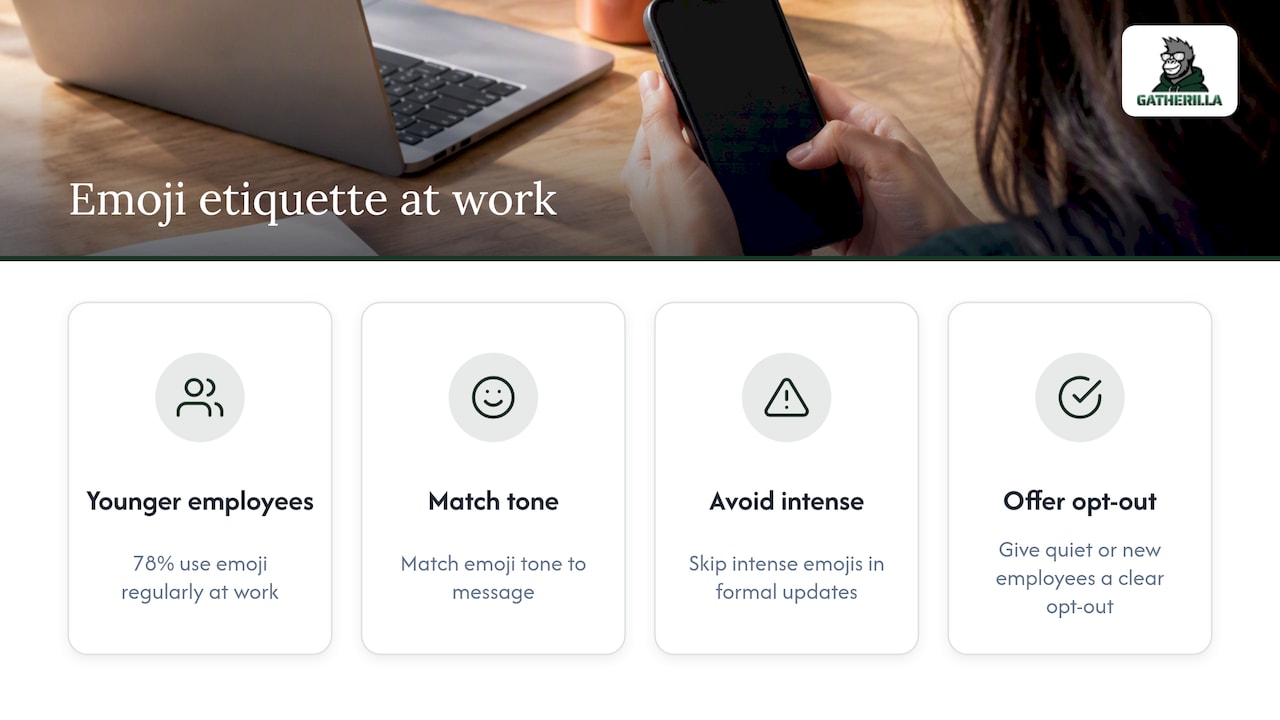
78% of younger employees report using emoji regularly at work, which means emoji games tend to land well across a multi-generational office when run with a few guardrails.
Pro Tip: Match the emoji’s emotional tone to your message, skip emotionally intense emojis in formal updates, and give quieter or newer employees a clear opt-out before the first round starts.
4. A leader’s checklist for choosing and scheduling games
Match the game to the room before you match it to the calendar.
- Group size: pictionary and charades scale to any size; bingo and story chains work best under fifteen people.
- Time available: two to five minutes fits a weekly opener; reserve longer formats like caption contests for monthly all-hands.
- Format: video calls lean on chat and reactions, while in-person groups do better with a shared whiteboard.
- Signals to track: participation rate, informal feedback after the session, and whether people opt in again the following week.
Pro Tip: If participation drops two weeks in a row, swap the game rather than the schedule, since novelty matters more than frequency.
5. What running these games actually taught us
One onboarding cohort warmed up noticeably faster after a five-minute emoji pictionary round replaced the usual round-robin introductions, with new hires asking follow-up questions they’d stayed quiet on before. The lesson that stuck: start with the smallest version of the game, watch how the room reacts, and adjust before adding complexity.
— Thomas
6. Gatherilla makes emoji games a daily habit, not an event
Running a new game every week takes planning most HR teams do not have time for. Gatherilla gives remote and hybrid teams a browser-based library of multiplayer games, including emoji-friendly formats, with no downloads and no account setup required before a meeting starts.
- Daily warmups: a rotating challenge keeps the five-minute opener fresh without anyone having to plan it.
- Onboarding: new hires get a low-pressure way to introduce themselves in their first week.
- Company-wide events: the same platform scales from a ten-person standup to an all-hands social hour.
Plans start on the Gatherilla pricing page, with a Free tier to try the format before upgrading.
FAQ
What is the easiest emoji game to start with at work?
Emoji pictionary is the easiest starting point because it needs no materials beyond a chat window and takes under five minutes per round. It also scales from two people to a full department without changing the rules.
Are emoji games appropriate for formal workplaces?
They work in formal settings when the emojis match the tone of the message and avoid emotionally intense symbols, a pattern confirmed by workplace emoji research. Keeping prompts neutral and professional, such as job titles or meeting topics, keeps the activity safe for mixed audiences.
How often should teams play emoji games?
A short two to five minute opener works well weekly, while longer formats like caption contests or bingo fit better as a monthly event. Watching participation rate and informal feedback helps decide whether to keep the same cadence or adjust it.
Do emoji games actually improve team creativity or morale?
A leader’s use of positive emojis during computer-mediated instructions increased members’ creative performance; the effect was mediated by decreased perceived objectification and was stronger for relationship-oriented members, illustrating concepts explained in Body Doubling: Why You Focus Better When Someone’s There.
What tools do I need to run emoji games virtually?
A meeting platform’s chat, reactions bar, and polling feature cover most games without extra software. For teams that want ready-made formats without building their own, Gatherilla’s pricing page lists plans that include a library of browser-based games.
Sources
- Perceptions of leadership emoji use in virtual teams / PLOS ONE (leader emoji use and creativity)
- Emojis at Work: The Effects of Emoji Use on Perceptions of Competence and Appropriateness | Collabra
- Adobe Future of Creativity study (emoji usage stat)