

Virtual Minute to Win It: Best Games for Remote Teams

Top virtual Minute to Win It games your team can play right now
These are 60-second challenges using household items, played over video call. No special equipment, no tech headaches. Just a timer, a webcam, and something from the kitchen drawer.
- Cookie Face: Place a cookie on your forehead and wiggle it into your mouth using only your facial muscles. No hands allowed. Universally funny to watch.
- Snowball Fight: Crumple paper into a ball, stand three feet back, and toss as many “snowballs” into a mug as possible in 60 seconds. Works on any video call.
- Noodle Doodlin’: Draw an assigned object (a sailboat, a dancing rabbit) with paper balanced on your head. The group votes on the best result.
- Cup Tower: Stack ten cups into a tower, then collapse them back into a single stack before time runs out. Requires only plastic cups.
- Human Dictionary: One player types two words starting with the same letter in the chat. Everyone else lists words that fall alphabetically between them. Zero supplies needed.
- Takeout Typing: The host shares a paragraph on screen. Players type it using chopsticks instead of fingers. Most words with fewest errors wins.
- Pack Attack: A lightning scavenger hunt. The host reveals a list of items at the last second and players race to gather as many as possible within 60 seconds.
- Separation Anxiety: Players sort a pile of mixed-color M&Ms into separate cups by color. Fast, simple, and oddly competitive.
- Book Brain: Balance a book on your head for the full 60 seconds. Add more books to raise the difficulty for confident players.
- Backward ABC: Recite the alphabet backward from Z. Start from a random letter to make it harder for repeat players.
- Extreme Hanky Panky: Pull tissues from a box one by one until it’s empty. Whoever empties theirs fastest wins.
- Don’t Blow the Joker: Blow cards off a deck one at a time, leaving the joker on the table. Requires a standard card deck.
Pro Tip: Mix no-supply games like Human Dictionary with physical ones like Cookie Face. That way, players who forgot to grab supplies can still compete every round.
How to set up and play these games in a virtual session
The core rules are simple: each player gets 60 seconds, scores are tracked per round, and the player or team with the most points at the end wins. What changes online is how you manage timing, fairness, and supplies.
Supplies to have ready before the call:
- Paper cups (10 per player for tower games)
- A standard deck of playing cards
- Cookies or crackers (for Cookie Face)
- Chopsticks
- Tissues and an empty tissue box
- Crumpled paper and a mug
- M&Ms or similar small candies
- A book or two
Technical setup checklist:
- Use Zoom, Google Meet, or Microsoft Teams. All three support screen sharing, which you’ll need for displaying timers and instructions.
- Share a visible countdown timer on screen. Browser-based timers work well and require no download.
- Assign one person as timekeeper and a separate person as scorekeeper. Two roles, not one. This keeps the host from burning out mid-event.
- Send game instructions by email before the session so players can gather supplies in advance.
- Ask players to keep their cameras on throughout. It’s half the fun.
For icebreaker games with larger groups, consider splitting into breakout rooms for physical challenges, then reconvening to compare scores. That structure keeps things moving and prevents the awkward silence of watching one person struggle while 40 others wait.
Adapt difficulty by age or skill level. For younger participants or mixed-ability groups, choose no-supply or low-dexterity games like Backward ABC or Noodle Doodlin’. For competitive adult teams, lean into the physical challenges and tighten the time limit.
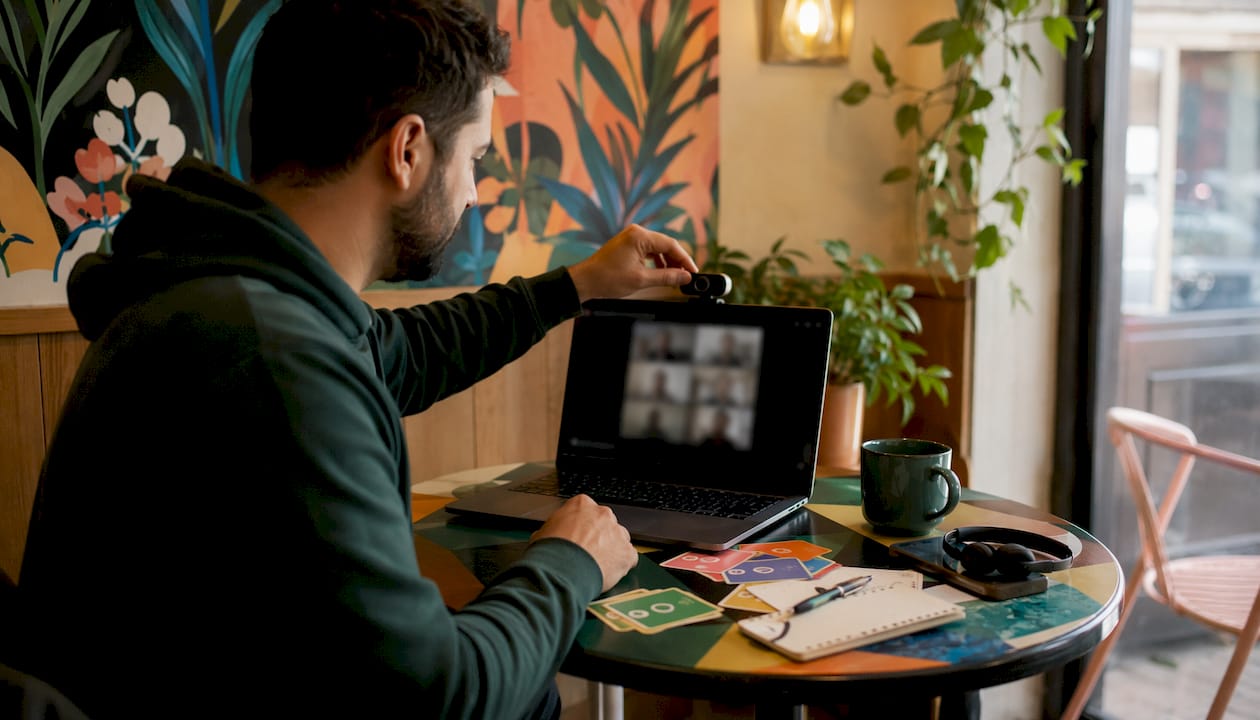
Facilitation tips that keep the energy from dying mid-session
The biggest mistake hosts make is treating these games like a meeting agenda. They’re not. The goal is controlled chaos, and your job is to keep the chaos fun rather than stressful.
Silly-by-design challenges lower the barrier to participation. When the task is inherently ridiculous, nobody feels embarrassed for struggling. That’s the point. Choose games where failing is as entertaining as winning.
Facilitation essentials:
- Play music between rounds. Even 20 seconds of upbeat background music resets the energy.
- Use a visible on-screen timer so players feel the pressure without relying on the host to count down verbally.
- Announce scores after every round, not just at the end. Running totals keep everyone invested.
- Rotate between all-player rounds and nomination rounds, where one person represents their team. The mix of formats sustains engagement better than any single structure.
- Give participation points, not just win points. Players who aren’t winning still need a reason to stay engaged.
Pro Tip: Separate your hosting and scorekeeping duties. Facilitator burnout happens fast when one person is running the game, watching the timer, and tracking points simultaneously. Assign a co-host to own the scoreboard.
For remote team-building activities that run longer than 30 minutes, build in one short break around the halfway point. Two minutes is enough. It prevents screen fatigue and gives players time to reset their supplies.
When facilitating cross-language or international teams, prioritize physical and visual challenges over word-based ones. Cookie Face and Cup Tower translate perfectly across language barriers. Human Dictionary does not.
What a well-structured virtual Minute to Win It event actually looks like
Sessions typically run 60–90 minutes and work for groups of 20 to 500 participants, depending on how you structure the rounds. The sweet spot for most corporate groups is 5–10 rounds, which keeps energy high without dragging.
| Format | Best for | Scoring method | Engagement level |
|---|---|---|---|
| Olympics-style (all play simultaneously) | Groups of any size | Cumulative points per round | High throughout |
| Team nomination rounds | Groups of 20+ | Team points per nominated player | High, with natural breaks |
| Elimination rounds | Smaller groups under 20 | Win/loss per round | Drops after early exits |
The Olympics-style format consistently outperforms elimination for remote events. When someone gets knocked out in round two, they spend the next hour watching. Cumulative scoring keeps every player relevant until the final tally.
Sample 75-minute event timeline:
- 0:00 to 0:10: Welcome, rules overview, team assignments
- 0:10 to 0:20: Warm-up round (low-stakes, no-supply game)
- 0:20 to 0:55: Main rounds (5–6 games, scores announced after each)
- 0:55 to 1:00: Short break, leaderboard update
- 1:00 to 1:10: Final two rounds (highest-stakes games)
- 1:10 to 1:15: Final scores, winner announcement, prizes
Key logistics to confirm before the event:
- Test your video platform and screen-share function at least 30 minutes early.
- Confirm all players have their supplies before the session starts, not during.
- Have a backup game ready in case a challenge causes technical issues.
- Decide in advance how you’ll handle audio delays during timed rounds.
- Keep a private chat channel open between the host and scorekeeper.
For hybrid meetings where some players are in-office and others are remote, run all games in the format that works for the remote players. Don’t create a two-tier experience.
How Gatherilla makes virtual team bonding easier to run
Running a polished virtual Minute to Win It session from scratch takes real coordination. Gatherilla handles the parts that eat up a host’s time: setup, scoring, and keeping the session structured without requiring anyone to download software or wrangle spreadsheets.
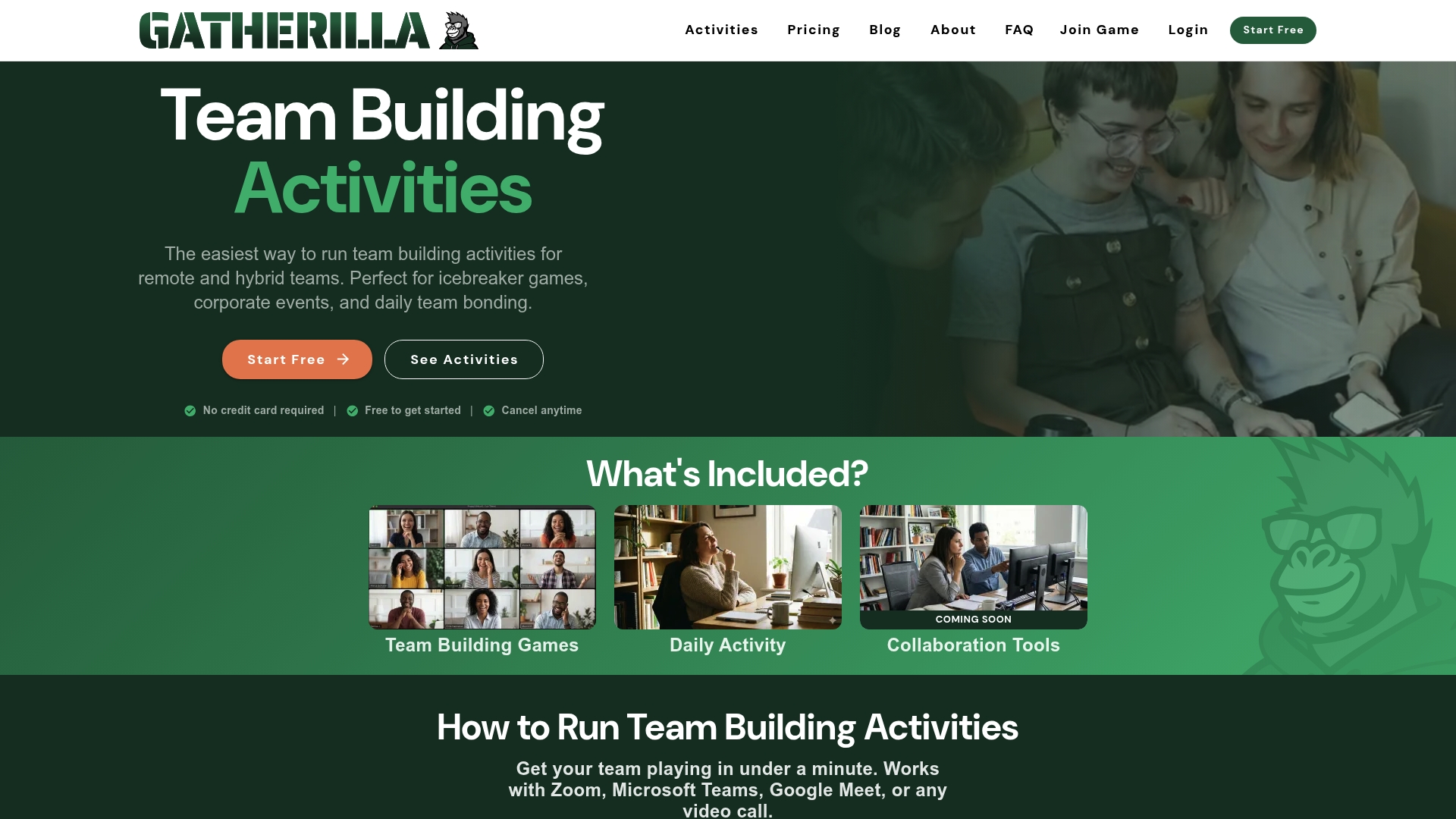
Gatherilla’s platform runs entirely in the browser and works with Zoom, Microsoft Teams, Google Meet, and other major conferencing tools. No IT approval needed, no installs. Teams can be up and playing in minutes.
What Gatherilla brings to virtual team bonding:
- Customizable multiplayer games built for remote and hybrid teams
- Real-time leaderboards that update automatically, so no one has to track scores manually
- Daily word and trivia challenges that keep teams connected between scheduled events
- Icebreaker activities designed for meeting openers and onboarding sessions
- Analytics and reporting for HR teams who want to track participation and engagement over time
The browser-based approach removes the single biggest friction point in virtual events: getting everyone into the same digital space at the same time. With Gatherilla, the link is the invitation.
For HR professionals trying to build team culture without organizing a physical event, Gatherilla’s corporate event solutions scale from small team check-ins to company-wide competitions. Explore Gatherilla’s team-building games to see what fits your next virtual session.
Key Takeaways
Virtual Minute to Win It works best when you combine silly-by-design challenges, cumulative scoring, and clear facilitation roles to keep all participants engaged from start to finish.
| Point | Details |
|---|---|
| Session length and group size | Events typically last 60 to 90 minutes and can accommodate groups from 20 up to 500 participants, depending on platform and structure. |
| Optimal round count | Run multiple rounds, typically a moderate number that keeps energy high without dragging the session. |
| Best competition format | Olympics-style cumulative scoring keeps every player engaged through the final round. |
| Facilitation roles | Separate hosting and scorekeeping duties to prevent burnout and maintain pace. |
| Platform choice | Browser-based tools like Gatherilla remove setup friction and automate leaderboards. |
Recommended
- Team Building Games for Microsoft Teams (That Actually Work in a Call) | Gatherilla Blog
- Browser-Based Team Building Games: Play Together Without Downloads or IT Approval | Gatherilla Blog
- Team Building Games That Don’t Make People Cringe | Gatherilla Blog
- 15 Icebreaker Games for Large Groups | Gatherilla Blog