

Hybrid Onboarding Games: 8 Ways to Connect New Hires

The best hybrid onboarding games are short, structured and played on individual screens, so a new hire in the office and one at home take part on exactly the same terms. Think team bingo, a scavenger hunt that ends with a call to a coworker, a company trivia round with a live leaderboard, and a daily five-minute challenge. Below you will find eight formats, how long each takes, and the design rules that keep remote people from becoming spectators.
TL;DR
- Give every player their own device, even when some people share a room. That is the simplest way to keep the game fair.
- Structure beats spontaneity: fixed rounds, explicit turns and a facilitator who makes sure the new hire gets to play.
- Mix one-off games in week one with a small daily habit through the first month.
- Make games inclusive: no alcohol, no events some people cannot attend, and introductions for everyone.
- Start with a free tier, run two or three formats, and ask new hires what they thought before you buy anything.
Table of Contents
- Why hybrid onboarding needs its own games
- Five design rules before you pick a game
- Eight hybrid onboarding games that work
- Quick comparison
- A rhythm for the first 90 days
- Making games welcoming and accessible
- Run a hybrid game session in six steps
- Promo: run these games without the prep
- Our perspective
- FAQ
- Sources
Why hybrid onboarding needs its own games
A game that works in a conference room often fails once one person is on a screen. The people in the room laugh, whisper and read each other’s faces. The person on the call hears half of it and waits for a turn that never comes.
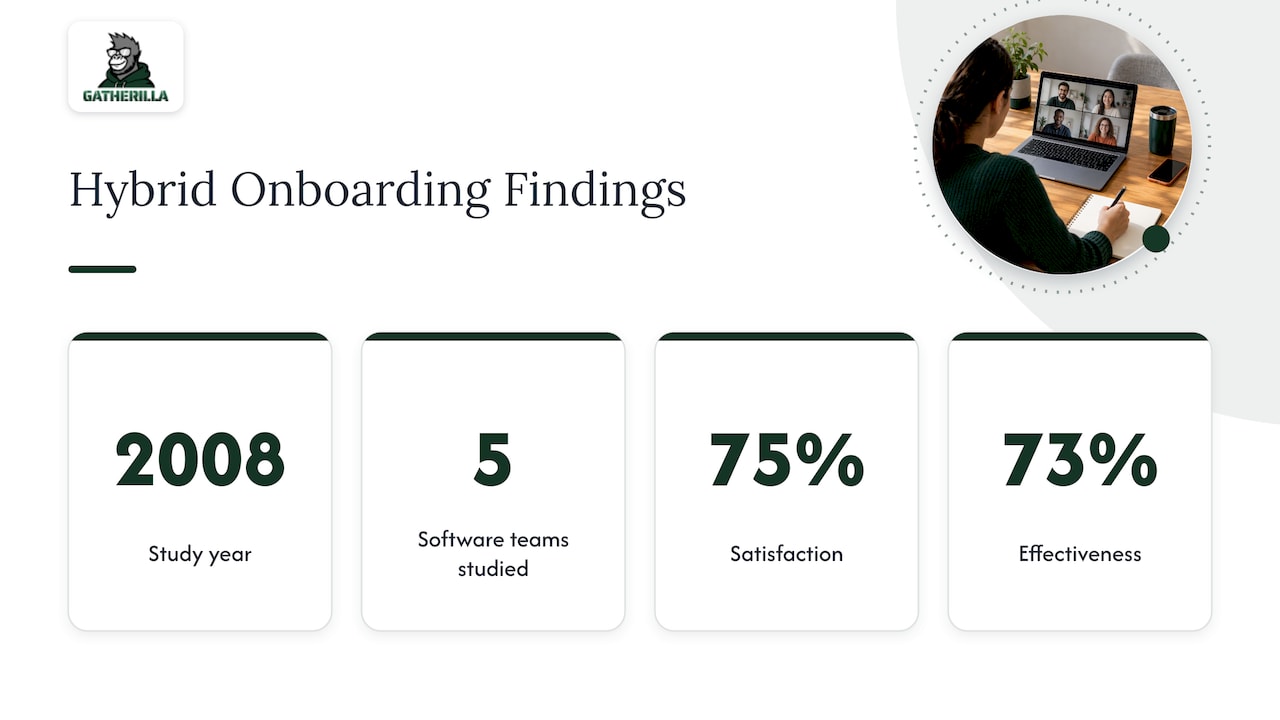
That gap matters more for a newcomer. Microsoft Research studied onboarding in five software teams and found that virtual onboarding works better with structured processes, frequent interactions and active manager moderation. The study dates from 2008, but the lesson holds: a game for a distributed group should be run as a facilitated participation system, not left as an optional social hour.
The payoff for getting the blend right looks real. A 2025 report from TalentLMS and BambooHR, cited by Training Industry, found that employees who experience hybrid onboarding report 75% satisfaction and 73% effectiveness compared with traditional models. Games are one of the cheapest ways to deliver the human half of that blend.
HR leaders also say the format matters for culture. SHRM’s reporting on onboarding ideas argues that onboarding has to feel fun and interesting to convey culture, and that games can liven up compliance topics that would otherwise be dry.
Five design rules before you pick a game
These rules come from guidance on running hybrid meetings, and they apply directly to games.
- Equal footing. The W3C’s hybrid meeting guide says co-located and remote participants should interact on an equal basis, with remote people given equal access to participate. In a game, that means the same input method, the same time to answer and the same visibility for everyone.
- Manage the queue. Decide who goes next and say it out loud. The same W3C guidance recommends managing the speaking queue explicitly and controlling side conversations, which is exactly what stops the room from drowning out the screen.
- Name a remote facilitator. The University of Wisconsin-Madison suggests assigning a facilitator to monitor online hands, questions and chat, and starting feedback with remote participants. For a game, one person watches the chat and the leaderboard while another runs the round.
- Introduce everyone. A human-factors review of hybrid meetings notes that introducing all participants is vital to making people feel welcome and included. Open with a name-and-role round before any competition starts.
- Keep it short and repeatable. Frequent, small interactions beat one big event. You can always add a second game; you cannot rescue a 45-minute game that lost the remote half in minute ten.
Eight hybrid onboarding games that work
1. Team bingo
Each square holds a prompt such as “has worked in another country”, “owns a pet” or “started in a different department”. New hires and existing staff mingle in a shared browser board and mark squares as they learn things about each other.
It has research behind it. In a German study of 98 students and young employees, participants especially appreciated Team Bingo for helping social integration and team building. Allow 10 to 15 minutes. Write prompts that work for both groups, so nobody needs to be physically present to tick a square.
2. The onboarding scavenger hunt
Send the new hire to find things: the right channel for a question, the person who owns a process, the place a template lives. SHRM reports that at Bazaarvoice the onboarding scavenger hunt included setting up a video meeting with a remote coworker. Copy that step. Every hunt should force at least one conversation with someone in the other location.
We have collected formats and clues in our guides to onboarding scavenger hunt ideas for remote teams and virtual scavenger hunt ideas. Plan 20 to 30 minutes, spread across the first week if you like.
3. Company trivia with a live leaderboard
Turn the handbook into questions: who founded the company, what the first product was, which team owns customer escalations. Live scoring keeps energy up, and answering on a personal device removes the room advantage. Mix easy questions that a new hire can win with a few insider ones that existing staff can answer, then let teams combine both.
Keep it to 10 or 15 minutes. Write the questions so people learn something useful, not just the history of the founders.
4. Mixed-pair “find three things in common”
Pair one remote person with one in-person person, each on their own laptop in a breakout room. Give them five minutes to find three things they share that are not work. Then each pair reports one surprise to the group. Because pairs are one-to-one, the remote partner cannot be talked over.
This works best when you deliberately cross groups: new hire with a veteran, office with home, one function with another.
5. Change three things
A classic observation game that suits hybrid rooms. Everyone turns the camera off for a minute and changes three things about their appearance or workspace. Then the other group guesses what changed. SessionLab describes a remote variation in which both groups change something off-camera and compare observations, which makes the exercise symmetrical. It takes about 10 minutes and needs no preparation.
6. Mood word check-in
The quickest icebreaker is a one-word answer. Everyone types a word or emoji describing how they feel, and the results appear as a shared cloud. It is anonymous-friendly, it takes two minutes, and it gives a nervous newcomer a way to say something without a spotlight on them. A “Would you rather?” poll fills the same slot with more humor.
For ready-made prompts, see our collections of hybrid meeting icebreakers and remote icebreaker games.
7. Team-bonding challenge in the first week
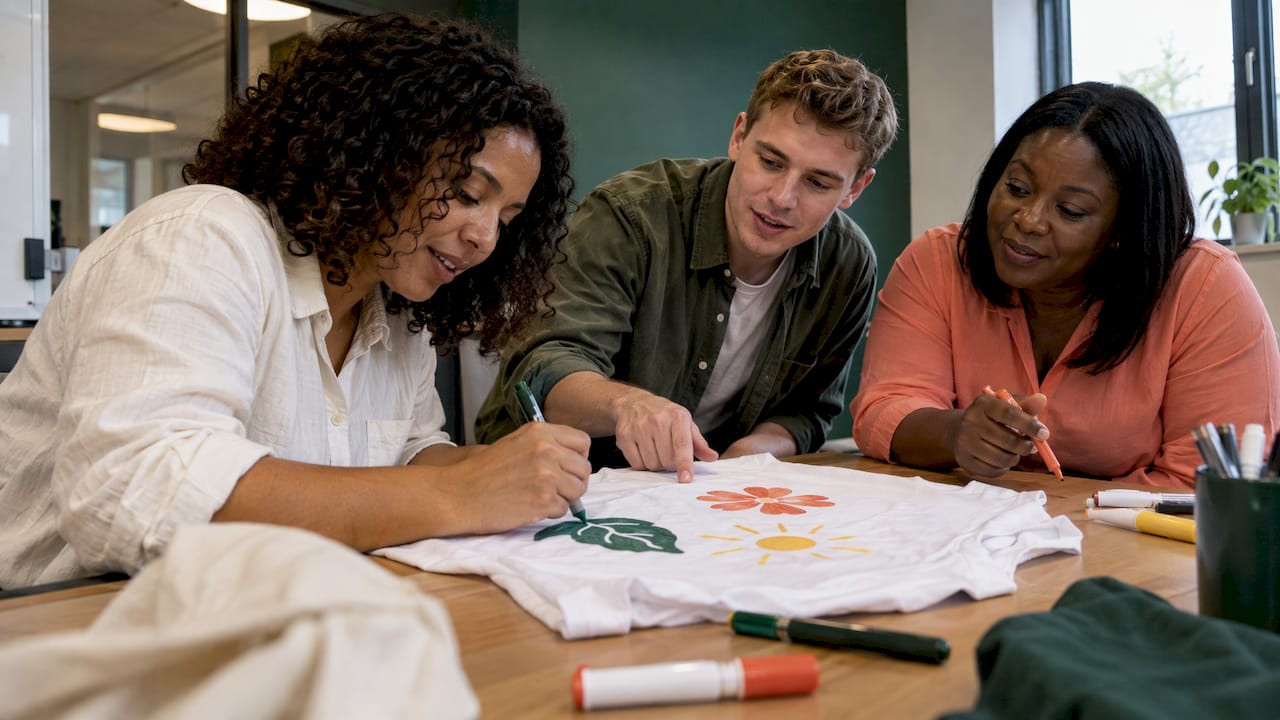
Great Place To Work reports that team-bonding exercises, such as designing a custom t-shirt or running a game tournament, help new hires connect with their team. Pick something a small group can do together in 30 minutes, with a visible result: a shared drawing, a team name, a mini tournament. The result becomes a story the group tells later.
8. The daily challenge
A five-minute word puzzle or trivia question that everyone plays at their own desk, wherever it is, is the most sustainable format on this list. It does not need scheduling, and the leaderboard gives people a reason to chat. It also builds the habit we care about most: small contact every day rather than one big event in week one.
Quick comparison
| Game | Time | Best for | Prep needed |
|---|---|---|---|
| Team bingo | 10 to 15 min | Day-one mingling | Low: write prompts |
| Scavenger hunt | 20 to 30 min | Learning where things are | Medium: write clues |
| Company trivia | 10 to 15 min | Culture and product knowledge | Medium: write questions |
| Mixed-pair common ground | 10 min | One-to-one bonds | None |
| Change three things | About 10 min | Energizing a mixed room | None |
| Mood word check-in | 2 to 5 min | Opening any meeting | None |
| Team challenge | About 30 min | Bonding in a small group | Low |
| Daily challenge | About 5 min | Long-term habit | None with a ready-made platform |
The timings are our planning estimates. Adjust them to your group size and how chatty your teams are.
A rhythm for the first 90 days
One game does not onboard anyone. Training Industry recommends segmenting onboarding into 30-60-90-day phases with consistent learning goals and a digital platform to centralize information and schedules. Games fit neatly into that structure.
- Week one: a name round, bingo, a scavenger hunt and a mood check-in at the start of every team meeting.
- First month: Great Place To Work suggests pairing each hire with a digitally savvy buddy, with weekly 30-minute buddy calls and quick daily check-ins. Add a daily challenge, and let the buddy pair play together once a week.
- Days 30 to 60: weekly virtual team sessions and a monthly in-office session for people who are nearby. Use mixed-pair games so the sessions connect both groups.
- Days 60 to 90: a trivia round written by the new hire, about what they have learned. It doubles as feedback on your onboarding content.
The same Training Industry piece stresses that pulse surveys and early feedback are essential for improving the process. Ask two questions after each game: did you feel included, and did you learn something? Drop the games that score low.
Making games welcoming and accessible
A game can exclude people without anyone intending it. Check these before you run one.
- Skip alcohol and optional-attendance events. SHRM advises that icebreakers avoid events some team members cannot attend, and alcohol-focused events that exclude non-drinkers.
- Do not force personal disclosure. Offer a choice of prompts, and let people pass. A new hire should never have to share something private to be accepted.
- Use accessible tools. The W3C guidance asks for accessible tools for all participants. Pick games that work in a browser, with captions available on the call, readable text and no reliance on fast reflexes or color alone.
- Explain the rules in writing. Put them in chat and on the first screen, so people who join late or use a second language are not lost.
- Give a buddy a role. Great Place To Work notes that buddies who excel at digital communication and check in daily can reduce remote employee anxiety.
If you want more starting points for new-hire sessions, our lists of new employee orientation games and virtual onboarding games cover formats that work on a video call.
Run a hybrid game session in six steps
- Set the goal. Pick one: meet people, learn the company, or break the ice. A game that tries all three drags.
- Choose the format by group size. Under 8 people, mixed pairs and bingo. Over 15, trivia with teams and a shared leaderboard.
- Put everyone on a device. Even in-room people join from their own laptop or phone, with the room speaker muted to avoid echo.
- Assign two roles. One host runs the game. One facilitator watches the remote chat and calls on remote players first.
- Introduce, play, debrief. A one-minute name round, the game itself, then two minutes asking what people learned.
- Collect feedback. Two quick questions in chat, then adjust next time.
Promo: run these games without the prep
Gatherilla is a browser-based platform for remote and hybrid teams. It offers customizable multiplayer games, daily word and trivia challenges, icebreakers, onboarding games and real-time leaderboards. Nothing needs to be downloaded, and it works with any video conferencing tool, so a new hire can join from a link.
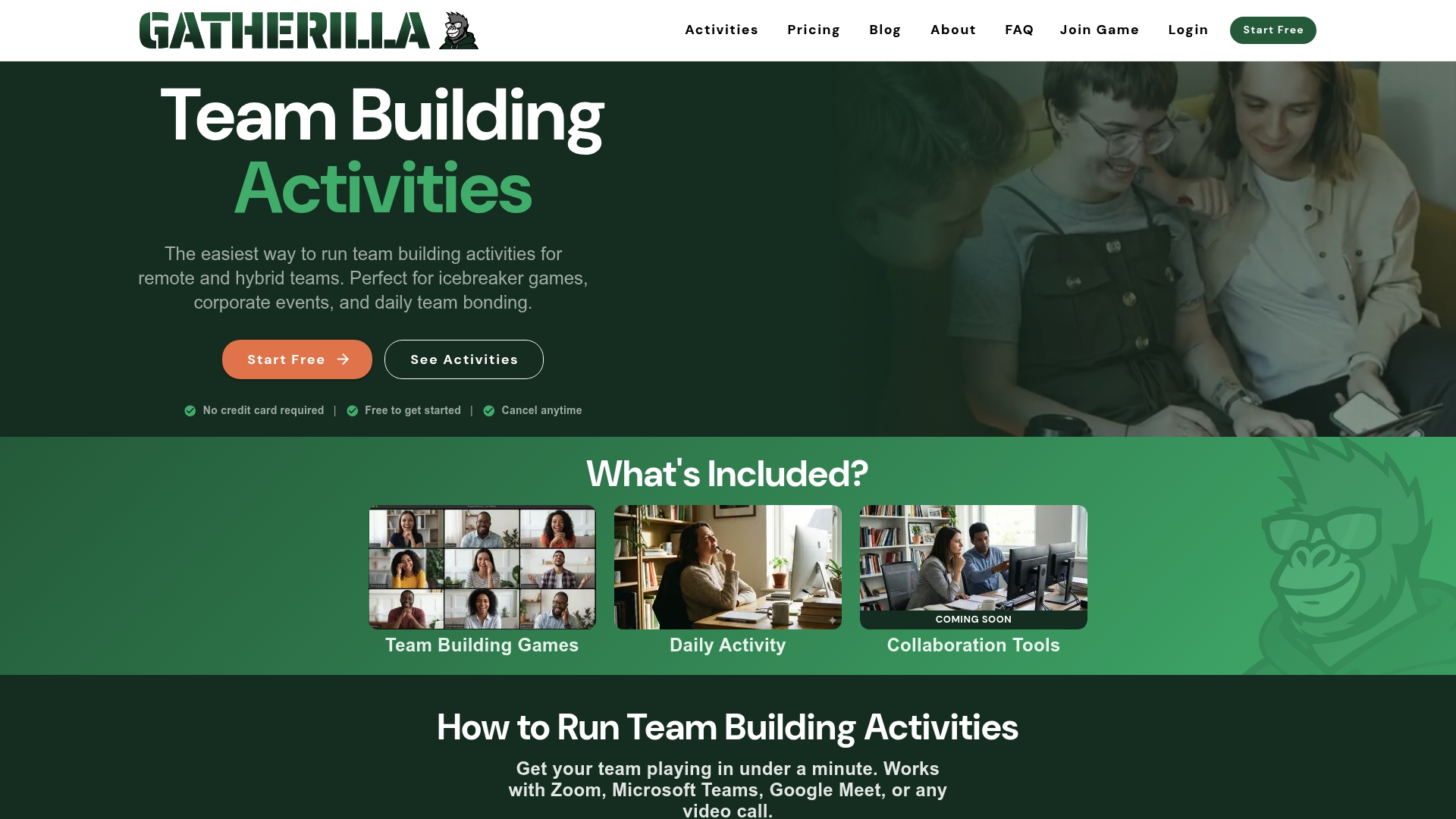
There is a free tier to try a few games with your next cohort. Premium is priced per seat: $0.50 to $1.00 per month, or $5 to $10 per year, as published on our site, and it adds more activities, reporting and priority support. See the current plans on the pricing page, or start from the Gatherilla home page.
Our perspective
Most onboarding plans treat connection as a bonus: a welcome lunch, a coffee chat, maybe a happy hour. In a hybrid team, the bonus tends to go to whoever is in the building. We built Gatherilla on the opposite idea, that everyone should be able to join the same game from a link, with no downloads and no account, and be on equal footing in seconds.
We also think onboarding fails when engagement is an event. A single day-one icebreaker is forgotten by Friday. What we aim for is a daily, sustainable habit: a short challenge, a leaderboard people glance at, recognition that ties back to company values. That is why our product centers on daily word and trivia challenges and on peer recognition rather than one-off exercises.
For HR leaders, the practical point is low friction. You should not need a facilitator guide or an hour of setup to run a good game. Start with the free tier, try a couple of formats with your next hires, and look at how they respond before you commit. If it helps your people feel part of the team sooner, that is the whole job.
Thomas
FAQ
What is the best onboarding game for a hybrid team?
Team bingo is a strong first choice, because it is quick, needs no skill and pushes people to talk to colleagues in both locations. A German study with 98 participants found that people especially appreciated it for social integration. Follow it with a scavenger hunt in week one.
How do I include remote and office employees equally?
Put everyone on their own device, manage turns explicitly, and assign someone to watch the remote chat. The W3C recommends giving remote participants equal access to take part. Starting feedback with remote players, as UW-Madison suggests, helps too.
How long should an onboarding game take?
For meetings, two to fifteen minutes is plenty. Longer games, such as a scavenger hunt or team challenge, can run 20 to 30 minutes or be spread over several days. Short and frequent beats long and rare.
Do onboarding games need special equipment?
No. A laptop or phone with a browser, a video call and a stable connection are enough. A browser-based platform removes downloads and accounts, which matters on a new hire’s first day, when their IT access may not be set up yet.
What if a new hire does not enjoy games?
Offer low-pressure formats such as a mood word or a poll, allow passing, and pair the newcomer with a buddy rather than putting them on the spot. Ask for feedback after the first week and adjust.
Sources
- Not Seen and Not Heard: Onboarding Challenges in Newly Distributed Teams (Microsoft Research)
- Gamifying Onboarding: How to Increase Both Engagement and Integration (Springer)
- Original Onboarding Options from 4 HR Leaders (SHRM)
- How Great Companies Build Trust Through the Hiring and Onboarding Process (Great Place To Work)
- Why Hybrid Onboarding Outperforms In-Person and Remote (Training Industry)
- 35 engaging hybrid activities (SessionLab)
- Hybrid Group Meetings (W3C)
- Hybrid meeting accessibility (UW-Madison)
- 8 Best Practices for Hybrid Onboarding (Great Place To Work)
- Application of human factors at hybrid meetings (PMC)
- Fostering Belonging with Your Virtual Teams (SHRM)