

Async is Eating Your Team's Tone: 5 Ways to Bring Nuance Back
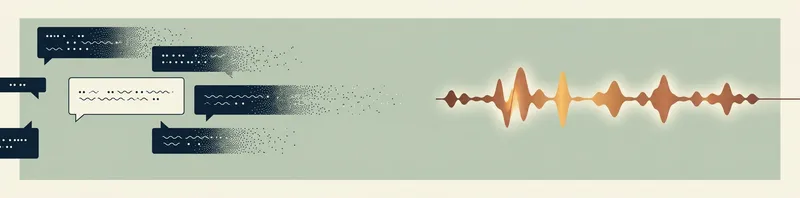
TL;DR: Plain text strips out the tonal signal — pace, pauses, emphasis, hesitation — that makes human communication land. Five practical fixes for remote teams: voice notes for emotional messages, tone tags on ambiguous text, a three-message escalation rule, regular synchronous low-stakes touchpoints, and managers who notice tonal drift in 1:1s.
The Slack message arrives at 4:47pm: “Can you sort this out?” Six words. No emoji. No follow-up. By 5pm, the recipient has rewritten the meaning four times in their head and decided their boss is annoyed with them. By Monday morning, the boss — who genuinely just meant “could you handle this when you get a chance, no rush” — is wondering why the recipient is being weirdly distant.
That’s a lost-tone incident. It’s banal. It happens in every remote team, multiple times a week. And it’s the operational cost of the connected loneliness paradox — what Andrew Dowsett described at HR Tech 2026 as the small interpretive gaps that compound into real distance over time.
Tone isn’t a soft skill. It’s signal. Text strips most of it out, and the more your team defaults to async, the more often that strip happens. The fix isn’t to roll back async — async is genuinely valuable. The fix is to be deliberate about which communication mode each message deserves, and to give text-based work the scaffolding it needs to carry meaning safely.
Here are five fixes that high-performing remote teams actually use.
1. Voice notes for anything emotionally charged
Voice notes are the single highest-leverage upgrade most async teams haven’t fully adopted. They take 15 seconds to record and they restore most of the tonal signal text loses: warmth, pace, hesitation, smile-in-voice, the small audible “hmm” that signals “I’m thinking, not annoyed.”
Use them for anything carrying emotional weight: pushback, gratitude, sensitive feedback, decisions that someone might read as a slight, conversations that have started to feel terse.
A useful rule of thumb: if you’re about to send a long Slack message that’s been edited three times, send a 30-second voice note instead. You’ll save five minutes and prevent a misread.
What voice notes are not good for: anything the recipient needs to skim, reference later, or share onward. Save documentation for text.
2. Tone tags and explicit framing
When text is the right medium, you can put back some of what voice carries by being explicit about your framing. Engineering teams have done this for years with conventions like:
- tldr: here’s the core thing first, detail follows
- genuine question: I’m actually asking, not testing you
- devil’s advocate: I don’t necessarily believe this
- nit: small comment, don’t lose sleep over it
- not blocking: flag for awareness, no action needed
- no rush: please do this when you can, not now
The point isn’t the specific labels — it’s that making your tone explicit removes the recipient’s job of guessing it. And guessing is where misreads happen.
This works best when teams adopt a small shared vocabulary, not when each person invents their own. Pick five, document them, and watch interpretive gaps shrink within a week.
3. The three-message escalation rule
If a thread has gone three messages back and forth and you’re still not aligned, switch medium. Hop on a five-minute call, send a Loom, or schedule a fifteen-minute pairing slot.
This sounds obvious but almost no team does it without explicit permission. Junior staff in particular tend to keep typing past the point of usefulness because suggesting a call feels like escalating. Naming the rule — “after three back-and-forths, anyone can call it” — removes the social cost.
The math is brutal in async-only teams: a thirty-message Slack debate that ends in confusion has cost everyone an hour of wall-clock time and another hour of cognitive overhead. A ten-minute call would have settled it cleanly.
4. Regular synchronous low-stakes touchpoints
Tone doesn’t just live in individual messages — it lives in the team’s general sense of who each other are. When you’ve heard your colleague laugh at something silly, you read their terse Slack messages with a wider grace window. When you haven’t, every message is interpreted in a void.
Build that grace window deliberately. Not with mandatory all-hands or forced fun, but with short, structured, voluntary moments. We built Gatherilla specifically for this: 15-minute team games that don’t need a host, an extrovert, or anyone “performing” — just a low-stakes moment where the team is in the same room, playing rather than transacting.
A useful cadence is one short synchronous touchpoint per week. Not necessarily a whole-team meeting — could be a small-group game, a coffee chat, or a “what are you working on” round. The point is that voices and faces enter the team’s bandwidth often enough to keep the texture alive.
The research on this is consistent: small-team rituals build the psychological safety that lets text-based work happen without misreads.
5. Managers as the nuance backstop
The final fix is structural. Managers who do regular 1:1s (weekly is best, biweekly is acceptable) are the team’s tonal early-warning system. They hear in someone’s voice when something is off, well before that person would write it.
Three behaviours separate good remote managers from average ones:
- Notice tonal drift. If a previously chatty team member has gone quiet on Slack, ask in your 1:1 — privately, gently. Often it’s nothing. Sometimes it’s a small misread that festered. Both outcomes are useful.
- Translate across generations. When a senior leader is frustrated by a junior’s text-first style or a junior is rattled by a senior’s preference for calls, the manager is often the only person positioned to translate without judgement.
- Default to voice for sensitive things. Performance feedback, project changes, anything that touches identity or autonomy — never via text. Always voice or video.
This is the leadership skill Dowsett was pointing at: closing connection gaps deliberately, not rolling back async work.
Adapt to your team’s defaults
The five fixes above are a starting point, not a template. Different teams need different emphases.
If your team skews younger and async-first, lean harder into tone tags and the escalation rule — you’ve got a strong text default, you need scaffolding to make text work safely.
If your team skews older or more sync-default, lean harder into voice notes — you’ll get faster adoption, and they reduce the meeting load while preserving the warmth your team values.
If your team is mixed (most teams are), invest hardest in the synchronous touchpoints. They’re the leveller. They give everyone the shared bandwidth that lets the rest of the fixes land. For more on hybrid meeting engagement and broader remote engagement strategies, see those guides.
Frequently Asked Questions
Doesn’t this just mean more meetings?
The opposite. The five fixes above are designed to reduce meetings by making async work better — fewer misreads, fewer escalations, fewer “let’s hop on a call” requests. The one synchronous moment we recommend is short, low-stakes, and replaces the all-hands that nobody enjoys.
Aren’t voice notes annoying for the recipient?
They can be if overused or too long. Keep them under 60 seconds, use them only for emotionally charged messages, and respect that the recipient may want a transcribed summary at the top for skim-readers. Used sparingly, most teams find they prefer them to long text walls.
What if my team won’t adopt tone tags?
Start with two: nit and genuine question. They’re the highest-leverage and the easiest to introduce because they remove obvious sources of misreads. If those land, expand. If they don’t, the team probably needs synchronous time more than it needs tagging — fix #4 first.
How do we handle this across time zones?
Voice notes scale beautifully across time zones — they’re async but signal-rich. Tone tags work asynchronously by definition. The synchronous touchpoint is the hard one — for distributed-across-globes teams, run two regional touchpoints rather than one all-hands at an ungodly hour for half the team.
What’s the connection between async tone and team retention?
Texture compounds. Teams that consistently misread each other accumulate small resentments that don’t get resolved because nobody can point to a specific incident. Over a year, this shows up as disengagement, then attrition. The fixes above are cheap insurance against an expensive problem.
Inspired in part by Andrew Dowsett’s “Timeless Team” talk at HR Tech 2026. Related reading: The Connected Loneliness Paradox, Hybrid Meeting Engagement, Remote Team Engagement Strategies.